
Level 2 charging
EV Charger Installation in Centennial, CO
A dedicated 240-volt circuit, sized against what your service can genuinely carry, installed where the car actually parks. Serving Centennial, Lone Tree and the neighbourhoods either side of E-470.
Home Charging That Keeps Up With Your Commute
A standard 120-volt outlet adds a handful of miles an hour, which works for a short commute and fails the moment you drive to the mountains on a weekend. A Level 2 circuit changes the arithmetic completely: most vehicles go from near-empty to full overnight.
Centennial Electric handles EV charger installation across Centennial and the surrounding south metro, and the job is more interesting than bolting a box to a wall. Three questions decide the whole project. Does your existing service have headroom for a continuous 32 to 48 amp load, measured honestly rather than assumed? Where does the car actually sit, which is often not where the panel is? And can the circuit be routed so the finished install looks deliberate rather than improvised?
We answer all three before quoting, which is why our numbers tend to hold. If the answer to the first question is no, a panel upgrade is the conversation, and we will price that separately so you can see exactly what the charger itself costs.
Everything in a Charger Install
The circuit is the job. The box on the wall is the easy part.
- 1Service capacity checkWe run a load calculation on the existing panel rather than guessing. Many Centennial homes on 150-amp service can carry a 40-amp charger comfortably; some on 100 amps cannot, and we will say which yours is.
- 2Charger selection guidanceHardwired or plug-in, 32 amp or 48 amp, and whether your vehicle and panel justify the larger unit. We install customer-supplied equipment and can recommend units we have had good service history with.
- 3Dedicated 240-volt circuitA properly sized conductor on its own two-pole breaker, with no shared neutral and nothing else on the run. Continuous loads get the 125 percent sizing the code requires.
- 4Route planning and concealmentThrough the attic, along a joist bay, in conduit down a garage wall or through a crawl space, chosen for the cleanest result rather than the shortest labour.
- 5Outdoor and detached-garage runsBuried conduit to a detached garage or a driveway post, with the burial depth and conductor type the code calls for in a Colorado freeze-thaw cycle.
- 6Load management where it helpsIf the service is genuinely tight, a load-management device can let a charger share capacity with a large appliance instead of forcing a full service upgrade.
- 7GFCI and disconnect requirementsOutdoor installations and plug-in units carry protection requirements that are easy to miss. We build them in from the start.
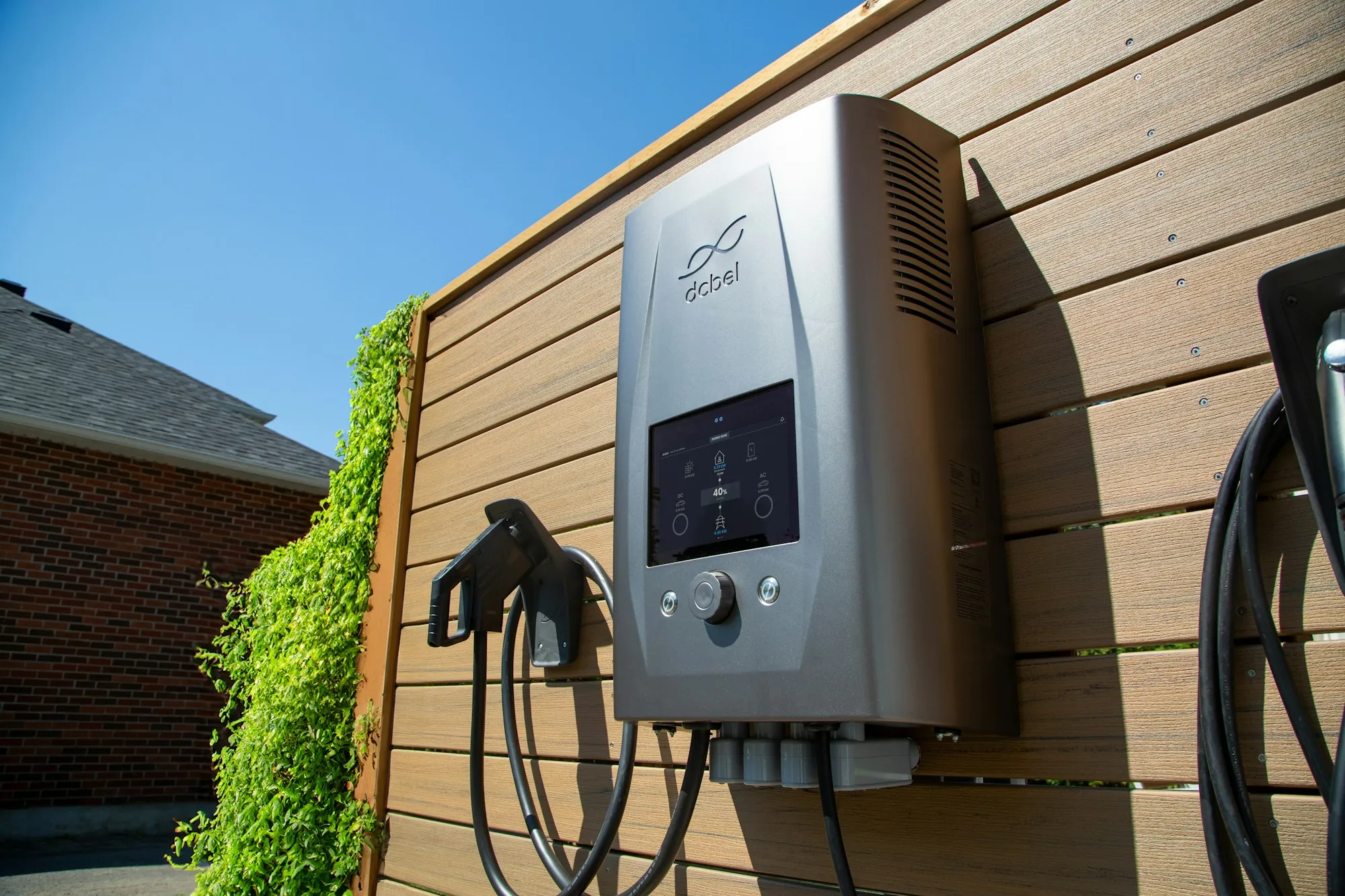
- 8Mounting at a working heightThe unit goes where the cable reaches the port without stretching across a walkway, with cable management so it is not on the floor.
- 9Permit and inspectionFiled with the jurisdiction covering your address, inspected and closed out.
- 10Commissioning and app setupWe energise, verify the charge rate against the vehicle, and walk through the unit's scheduling and app pairing before leaving.
From Driveway to First Full Charge
Site visit and load calculation
We look at the panel, the parking spot and the possible routes between them, then run the numbers. You find out whether your existing service covers it, what amperage makes sense for your car, and what the run will cost. Most visits take under an hour and the written quote follows the same day or the next.
Installation
Usually a half day for an attached garage with a reasonable route, longer for a detached garage or a long buried run. We cut only what the route requires, run conduit where it will be visible, and keep the rest of the house energised throughout. Drywall patching, where any is needed, is left paint-ready.
Inspection and handover
The jurisdiction inspects the circuit, we meet the inspector, and then we commission the charger with your vehicle plugged in so you see the actual delivered rate rather than a brochure figure. You get the permit record, the warranty and a labelled breaker.
Why Centennial Electric for a Charger Install
The load calculation comes first, not after the quote
It is common to be told a charger requires a service upgrade. Sometimes it genuinely does. Often it does not, and the only way to know is to calculate it. We do that before quoting, which occasionally costs us a much larger job.
We install where the car parks
The cheapest install is a unit bolted next to the panel, which is frequently the wrong wall. We plan around where the vehicle sits and which side the charge port is on, because a cable stretched across a garage floor is a daily annoyance and a trip hazard.
Colorado weather is part of the plan
Outdoor and detached-garage runs here face freeze-thaw cycles, hail and UV. We specify conduit, fittings and burial depth accordingly, and we mount outdoor units where snow sliding off a roofline will not land on them.
What you get on every job
- Licensed & Insured
- Load Calculation Before Quoting
- Permit Filed and Inspection Attended
- Flat Written Pricing
- Workmanship Warranty
Stop Charging Overnight for Forty Miles
Tell us the car, the panel location and where you park, and we can usually give you a close estimate on the phone before anyone drives out. The site visit and the written quote are free. We cover Centennial, Lone Tree, Greenwood Village, Parker, Highlands Ranch and the rest of the south metro.
Licensed, insured and permit-handling electricians. (303) 529-7038.